Tensions are reaching a boiling point in Azad Kashmir as the government takes unprecedented measures to control an emerging political crisis. With internet and mobile services being shut down, Rangers being deployed to Muzaffarabad, and a Supreme Court judge mysteriously disappearing from a critical case, the region stands at a crossroads that could define its political future. Meanwhile, in Gilgit-Baltistan, election campaigning has concluded amid allegations of systematic exclusion of major political parties, raising serious questions about the democratic process in Pakistan's northern territories.
Internet and Mobile Services Shutdown in Azad Kashmir
In a dramatic escalation of the ongoing political situation, authorities have announced that internet and mobile services will be completely shut down in Azad Kashmir. This decision has been justified on grounds of maintaining law and order, but critics see it as a deliberate attempt to suppress the planned protests and demonstrations organized by the Joint Awami Action Committee.
The shutdown comes at a critical time when the Joint Awami Action Committee has announced a major dharna (sit-in protest) and a long march scheduled to begin on the 9th. The timing of this communication blackout has raised serious concerns about the government's intentions and its commitment to allowing peaceful democratic expression.
The decision to cut off communications has far-reaching implications for the people of Azad Kashmir. It not only affects their ability to organize and coordinate peaceful protests but also impacts everyday communication, business operations, and emergency services. This heavy-handed approach has been widely criticized as an overreach of government power.
Impact on Protest Organization
The communication shutdown is clearly aimed at disrupting the coordination efforts of the Joint Awami Action Committee. However, the committee has already prepared alternative arrangements, including utilizing signal coverage from neighboring areas of Khyber Pakhtunkhwa and Punjab. Additionally, overseas committees are expected to play a crucial role in disseminating footage and information to the wider world.
Rangers Deployment and Security Buildup
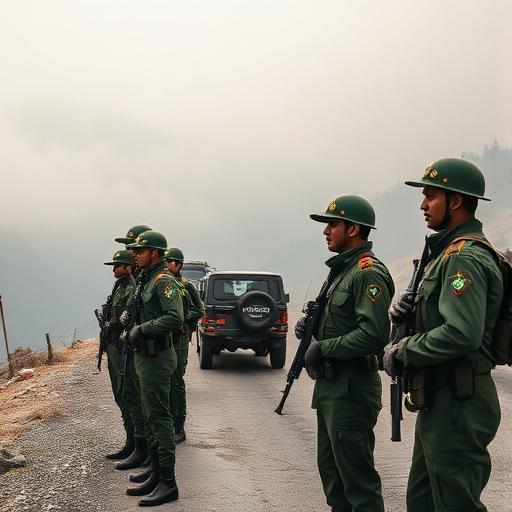
The government has deployed 14,000 additional security personnel across Azad Kashmir, with Rangers specifically being stationed in Muzaffarabad. This massive security presence indicates the seriousness with which the government views the upcoming protests and raises concerns about potential confrontations between protesters and security forces.
Muzaffarabad has been identified as the primary destination for the long march, with participants expected to converge on the city from all parts of Kashmir starting on the 9th. The deployment of Rangers, a paramilitary force typically reserved for serious security situations, signals the government's readiness to use force if necessary.
The security buildup extends beyond Muzaffarabad to all cities and towns across Azad Kashmir, both large and small. This comprehensive deployment suggests that the government is anticipating widespread participation in the protests and is preparing for potential unrest throughout the region.
Historical Context of Security Measures
The current security measures are reminiscent of previous crackdowns on protests in the region. Past incidents have included firing and violence, often attributed to individuals wearing masks or face coverings. This history has informed the Joint Awami Action Committee's decision to implement strict protocols for the upcoming demonstrations.
Supreme Court Drama: The Missing Judge
In a stunning development that has added another layer of complexity to the crisis, Justice Raza Ali Khan has effectively disappeared from a critical Supreme Court reference case. The reference was filed by the government in the Azad Kashmir Supreme Court to challenge the stance of the Joint Awami Action Committee.
The original three-member bench was led by Chief Justice Raja Saeed Akram, along with Justices Khalid Yousuf Chaudhry and Raza Ali Khan. However, Justice Raza Ali Khan has refused to hear the reference, leaving only a two-member bench to proceed with the case.
The remaining bench of Raja Saeed Akram and Khalid Yousuf Chaudhry is expected to rule that abolishing the refugee seats is unconstitutional and illegal, and would cause harm. This ruling would align with the government's position against the Joint Awami Action Committee's demands.
Conflict of Interest Concerns
A significant irony has emerged regarding the composition of the bench. Chief Justice Raja Saeed Akram, who hails from Lala Musa, is himself a refugee and occupies a refugee seat on the court. This creates an apparent conflict of interest, as he is essentially ruling on matters that directly affect his own position and the community he represents.
The Joint Awami Action Committee has strongly protested what they describe as manipulation in the name of refugees. They argue that this manipulation deprives native Kashmiris of genuine leadership and representation, perpetuating a system that serves external interests rather than the local population.
Joint Awami Action Committee's Response and Protocols
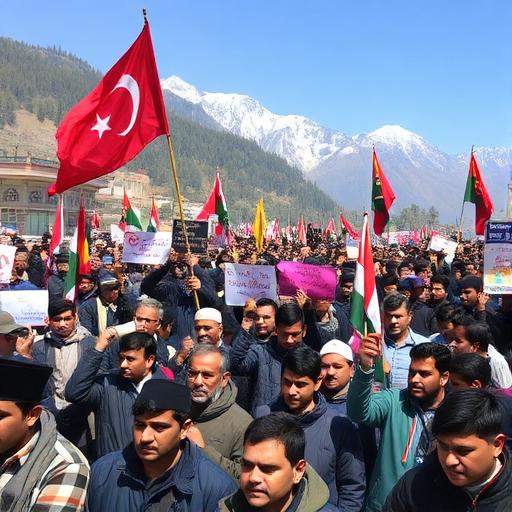
Despite the government's attempts to suppress their movement, the Joint Awami Action Committee has shown remarkable organization and discipline. They have issued comprehensive Standard Operating Procedures (SOPs) for the upcoming protests, demonstrating their commitment to peaceful and orderly demonstrations.
The committee has mandated that no participant will wear masks or face coverings during the protests. This decision was made in response to past incidents where masked individuals engaged in violence or provocative actions. By ensuring all faces are visible, the committee aims to maintain accountability and prevent infiltration by provocateurs.
Another critical SOP prohibits the carrying of any weapons during the protests. This rule underscores the peaceful nature of the movement and eliminates any justification for violent crackdowns by security forces. The committee has made it clear that this is a non-violent struggle for rights.
Guidelines on Political Discourse
The committee has also established guidelines regarding speech and slogans during the protests. They have prohibited any hateful or inflammatory speech against national institutions. This measure aims to prevent any escalation that could lead to confrontations or provide justification for government crackdowns.
Community committees have been formed at various levels to ensure compliance with these guidelines. Media committees have been established to document and report on the protests, ensuring that accurate information reaches the public despite the communication blackout.
Grassroots Support and Fundraising
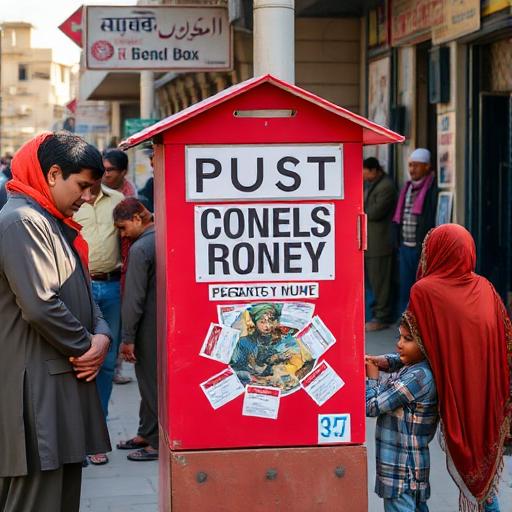
The movement has garnered significant grassroots support, with communities across Azad Kashmir actively participating in fundraising efforts. Large collection boxes have been placed in cities, and remarkably, even children have been seen contributing their small savings to the cause.
This widespread participation contradicts government allegations of foreign funding. The visible, public nature of the fundraising, with identifiable local participants including young children, demonstrates that the movement draws its strength and resources from the local population rather than external sources.
The government's response to anyone demanding their rights is to accuse them of foreign funding, but the reality on the ground tells a different story.
The level of mobilization for this protest is reported to be significantly higher than previous demonstrations. People from all walks of life are preparing to participate in both the long march and the sit-in protest, indicating deep-seated frustration with the current situation.
Gilgit-Baltistan Elections Amid Controversy
While Kashmir braces for protests, Gilgit-Baltistan has completed its election campaign period as of midnight. Polling is scheduled for the 7th, with no campaigning permitted on the 6th. A heavy law enforcement presence has been deployed throughout the region ahead of the vote.
Pakistan Tehreek-e-Insaf (PTI) has faced significant obstacles during the campaign, with their participation effectively curtailed. When questioned about the fairness of elections between participating parties, officials like Rana Sanaullah claim the process will be free and fair. However, they have no response when asked how elections can be fair when a major party has been sidelined.
Despite being barred from formal participation, PTI supporters are running as independent candidates and forming alliances with various political groups. The sentiment on the ground remains strongly pro-PTI, with supporters drawing provocative comparisons.
A Telling Comparison from the Ground
One particularly striking statement from a local supporter captured the political mood. When asked about the situation, he drew an analogy to international relations:
America fears Iran because of its nuclear power. Similarly, the current Pakistani government fears Imran Khan. Just as America fears Iran's missiles, Pakistan's establishment fears Imran Khan. God willing, we will vote and secure our rights.
This sentiment appears widespread across Gilgit-Baltistan. Despite high-profile rallies by PPP leaders including Bilawal Bhutto and Aseefa Bhutto, a large silent majority reportedly supports pro-Imran candidates running as independents.
Putin's Comments on Pakistan-China Relations
In an interesting international development, Russian President Vladimir Putin responded to an Indian journalist's question about Pakistan's relationship with China. The journalist suggested that China has complete control over Pakistan, asking if Pakistan is entirely in China's grip.
Putin's response was notably diplomatic and, according to observers, somewhat embarrassing for India. He stated that Pakistan is a large country with significant resources and relationships with many other nations. He explicitly rejected the notion that Pakistan is completely under Chinese control or domination.
This statement from a major world leader counters the narrative often pushed in Indian media about Pakistan being a Chinese satellite state. Putin's acknowledgment of Pakistan as an independent nation with diverse international relationships carries significant weight given Russia's own complex relationships with both China and India.
Legal Developments: Saqib Chadar Case
In domestic legal news, Saqib Chadar, a PML-N Member of Provincial Assembly, has had a case registered against him by the FIA's Anti-Cybercrime Circle. The case stems from a complaint filed by actress Moomina Akbar, who provided evidence supporting her allegations.
The FIA conducted an investigation and found the evidence credible enough to register a formal case. Following the registration, Saqib Chadar obtained bail from the court. The investigation is ongoing, with preliminary findings supporting Moomina Akbar's claims.
This development highlights the continuing issues of harassment and misconduct involving political figures, and the importance of accountability mechanisms. The fact that the FIA found the actress's evidence credible enough to proceed is significant in a country where such complaints often face institutional obstacles.
Final Thoughts
The situation in Azad Kashmir represents a critical juncture for the region and for Pakistan's handling of civil unrest. The government's decision to shut down communications, deploy paramilitary forces, and pursue legal maneuvers through the courts suggests a strategy of containment rather than engagement with legitimate grievances.
The Joint Awami Action Committee has demonstrated remarkable organization and discipline, implementing protocols designed to ensure peaceful protests while preventing provocations. Their demand for genuine representation and an end to manipulation of the refugee seat system resonates with many Kashmiris who feel marginalized by the current political arrangement.
Meanwhile, the Gilgit-Baltistan elections proceed under a cloud of controversy, with a major political party effectively excluded from participation. The ground sentiment appears strongly supportive of PTI-aligned candidates, despite the official restrictions against them.
The coming days will be crucial in determining whether the government chooses dialogue or confrontation. The deployment of Rangers and the communication blackout suggest preparations for the latter, but the scale of public mobilization may force a reconsideration of this approach. Whatever unfolds, the people of Azad Kashmir and Gilgit-Baltistan have made clear their determination to assert their democratic rights, regardless of the obstacles placed before them.
As international observers like Putin acknowledge Pakistan's significance as an independent nation, the government faces pressure to demonstrate that its democratic institutions function for all citizens, including those in its northern territories. The world will be watching how this situation develops in the critical days ahead.